


Project Overview
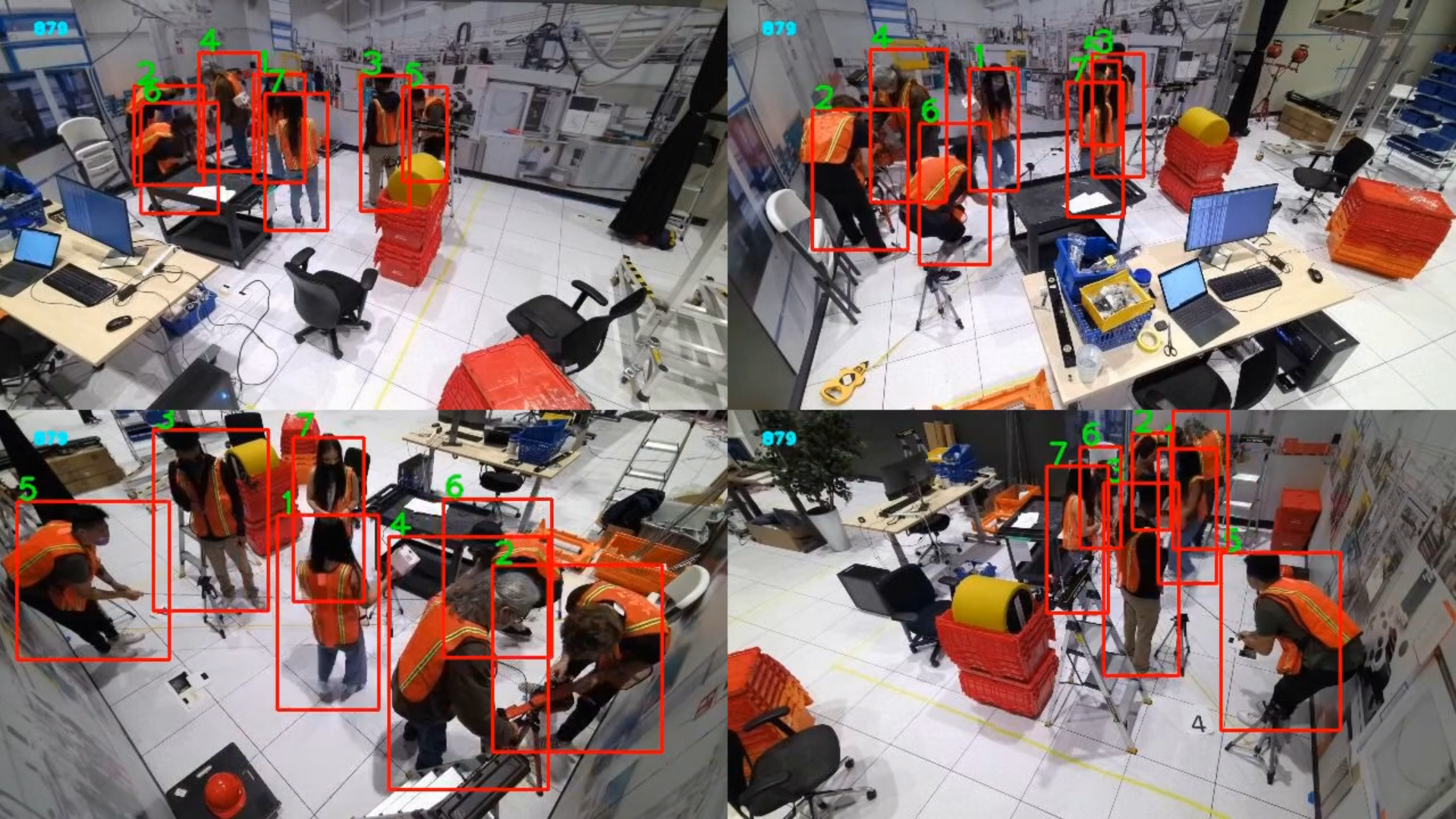
The multiple camera tracking project is a groundbreaking initiative aimed at advancing surveillance capabilities within indoor building environments. By strategically deploying a network of interconnected cameras, the project addresses the challenge of seamlessly tracking multiple objects across various zones. This innovation not only mitigates blind spots but also opens new possibilities for efficient asset management and rapid response to events in dynamic indoor settings.
The project proposed a new end-to-end pipeline, from Single Camera to Multi-Camera Tracking by connecting and synching data across camera network. Various deep learning models and optimization techniques were leveraged, including DeepSORT, FairMOT, Tree Parzen Estimator and feature matching algorithms.
The system is being used in a 5-floor building with 50 cameras and 12 different observation areas.
Responsibilities
Leaded data team and annotation pipeline, including data collection, extraction, annotation and quality verfication.
Created partial automation pipeline with re-identification model to unify discrete video data pieces, resulted in x2 annotation speed compared to traditional method.
Collaborated to generate the largest multiple-camera tracking dataset compared to existing datasets in terms of camera, tracking area, and human ID quantities.
Collaborated to design new pipeline for for tracking across multiple cameras using different techniques, namely camera calibration, top-view representation, feature matching, etc.
Prepared weekly reports and represented project progress to stakeholders.